Alexander Nanau
“Cinema as Civic Inquiry”
Alexander Nanau (born 18 May 1979) is a German–Romanian director, producer, editor and cinematographer whose documentaries are shaped by long-term presence and close collaboration with the people he films. His work is characterized by attention to everyday moments, unfolding situations, and the human dimension of complex realities.
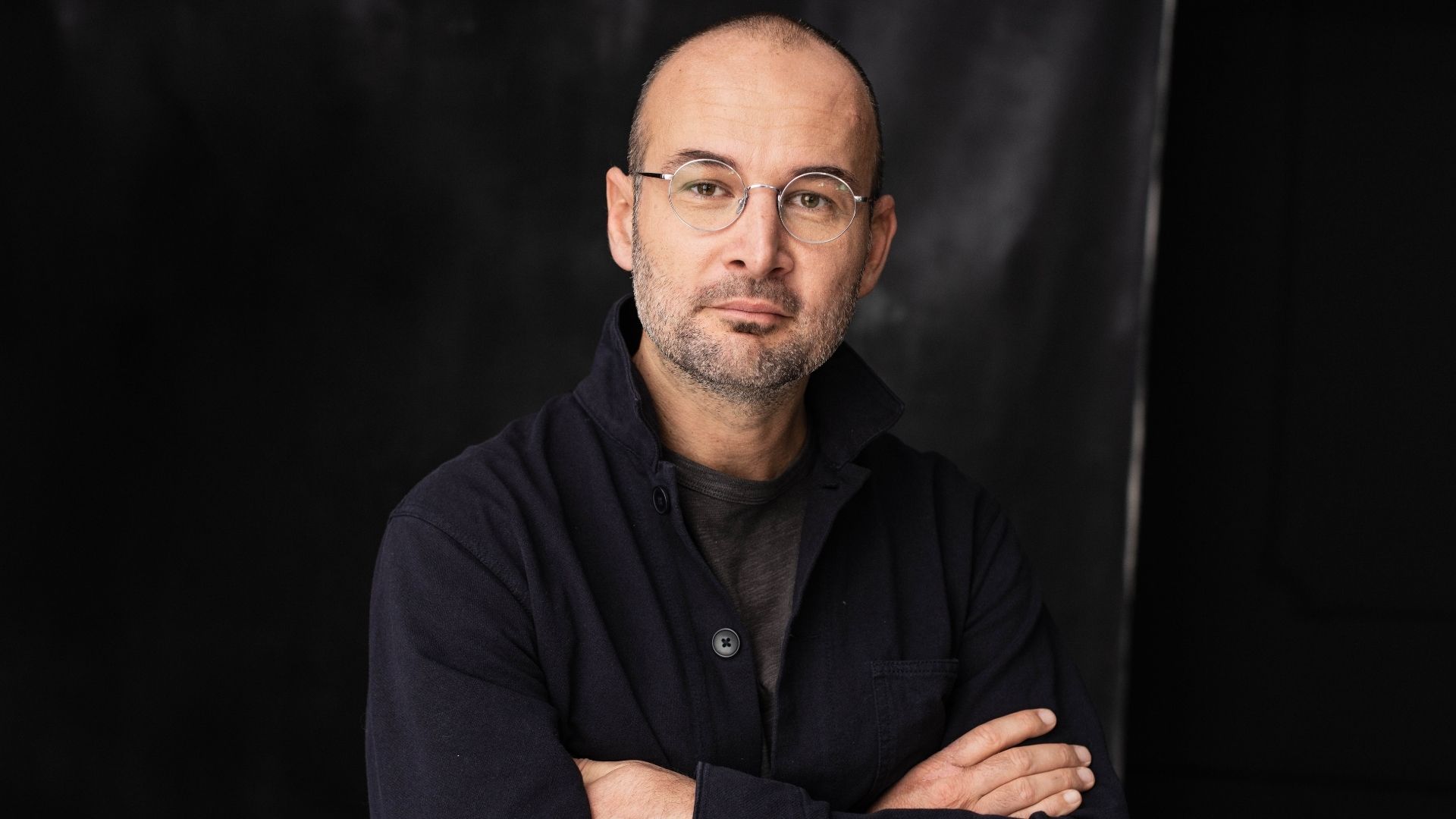 Alexander Nanau.
Born in Bucharest, Nanau has lived in Germany since 1990. He studied film directing at the German Academy of Film and Television in Berlin (DFFB) and later received scholarships from the Sundance Institute and the Akademie der Künste in Berlin. In 2007, he founded his production company, Alexander Nanau Production, based in Romania.
He gained international recognition with The World According to Ion B. (2009), an intimate portrait of a homeless artist living in Bucharest, which won the International Emmy Award in 2010 in the Arts Programming category. The film marked the beginning of a body of work grounded in closeness, time, and trust between filmmaker and protagonist.
„It’s a very personal thing about how I see documentary filmmaking and why I chose it, and I chose it because I want to learn things. It has to become so intimate that I can really understand the lives of others and understand what drives other people. And so, for me, it’s a way of learning. For sure, you can get very intimate interviews; you can get a lot authentic emotions in interviews. But when you follow people for a year in their work or in their life, you morph in a way into their life. And I find that my job as a storyteller is then to really compress my own experience during that year and pass it on to the viewers. So, I think my film is good when I have managed to let the viewer in that one and a half, two hours, live the same way I lived with these people, and really have a cinematic experience in terms of seeing the world through someone else’s eyes.“
Nanau continued this line of work with Toto and His Sisters (2014), filmed over several years and following the lives of three siblings growing up in extreme poverty while navigating systemic neglect and institutional intervention. The film was nominated for the European Film Awards in 2015 and screened widely at international festivals, drawing attention for its emotional directness and sustained observation of everyday life.
 Toto and his Sisters, 2014.
„The most important thing for me is my own attitude towards people. I think that people are basically good. And I believe that everyone is where they are in their lives because of their circumstances, and they had to take decisions. My biggest curiosity is to understand people. Even if they seem bad. Framing is the most important thing in observational style. The way you frame isn’t only the way you see the world or the characters, but the way you capture the authenticity of people, the way you carve out what you think is the definition of someone in a certain moment. That’s also why I prefer to do the filming myself.“
In addition to directing, Nanau works as his own cinematographer and has also collaborated in this role on other documentary projects, including Nothingwood (2017), directed by Sonia Kronlund and filmed in Afghanistan, which premiered in the Directors’ Fortnight section at the Cannes Film Festival.
His documentary Collective (2019) follows journalists, doctors, politicians, and victims’ families in the aftermath of a tragic nightclub fire in Romania, observing systemic corruption within Romania’s public healthcare and political systems following a tragic nightclub fire. . The film received the European Film Award for Best Documentary in 2020 and became the first Romanian film nominated for the Academy Award for Best International Feature Film, while also receiving a nomination for Best Documentary Feature.
„The street movements that took place felt like a turning point in Romanian society. It was the first time since the revolution in 1989 that so many people took to the street. And so it was clear that it would be interesting to do something to understand what’s really happening in this very young democracy. But I didn’t know where to start. So it was only at the end of November that I was in Berlin with my co-producer from HBO Europe, Hanka Kastelicová, and we said, “OK, we have to do something. Let’s put a team together to start researching different directions and see if we can find characters which I could film in an observational manner.” Because that’s the way I do documentary films.“
 Collective, 2019.
Across his work, Alexander Nanau focuses on people rather than conclusions, allowing films to grow from shared time and experience. His documentaries invite audiences to stay close to unfolding realities and to encounter stories through the presence of those who live them.